Last updated: June 29, 2026
How to Use Dianping in China
Dianping is one of the most useful restaurant discovery apps in mainland China. Think of it as a local review, photo, map, coupon, and restaurant search tool. For travelers, the trick is not just finding the highest score. It is learning how to judge reviews, photos, prices, queues, distance, and food risk together.
Quick answer
Use Dianping to search nearby food, compare review volume, open recent photo reviews, check menu pictures, estimate per-person price, and confirm whether the restaurant fits your comfort level. If you have allergies, bring a written Chinese allergy note before you order.
1. Start with nearby restaurants or a specific food search
After opening Dianping, confirm the city and location first. You can browse nearby food or search for a specific dish. Useful Chinese search terms include 附近美食 (nearby food), 火锅 (hot pot), 小吃 (snacks), 面馆 (noodle shop), and city-specific dishes like 西安 肉夹馍 or 桂林 米粉.
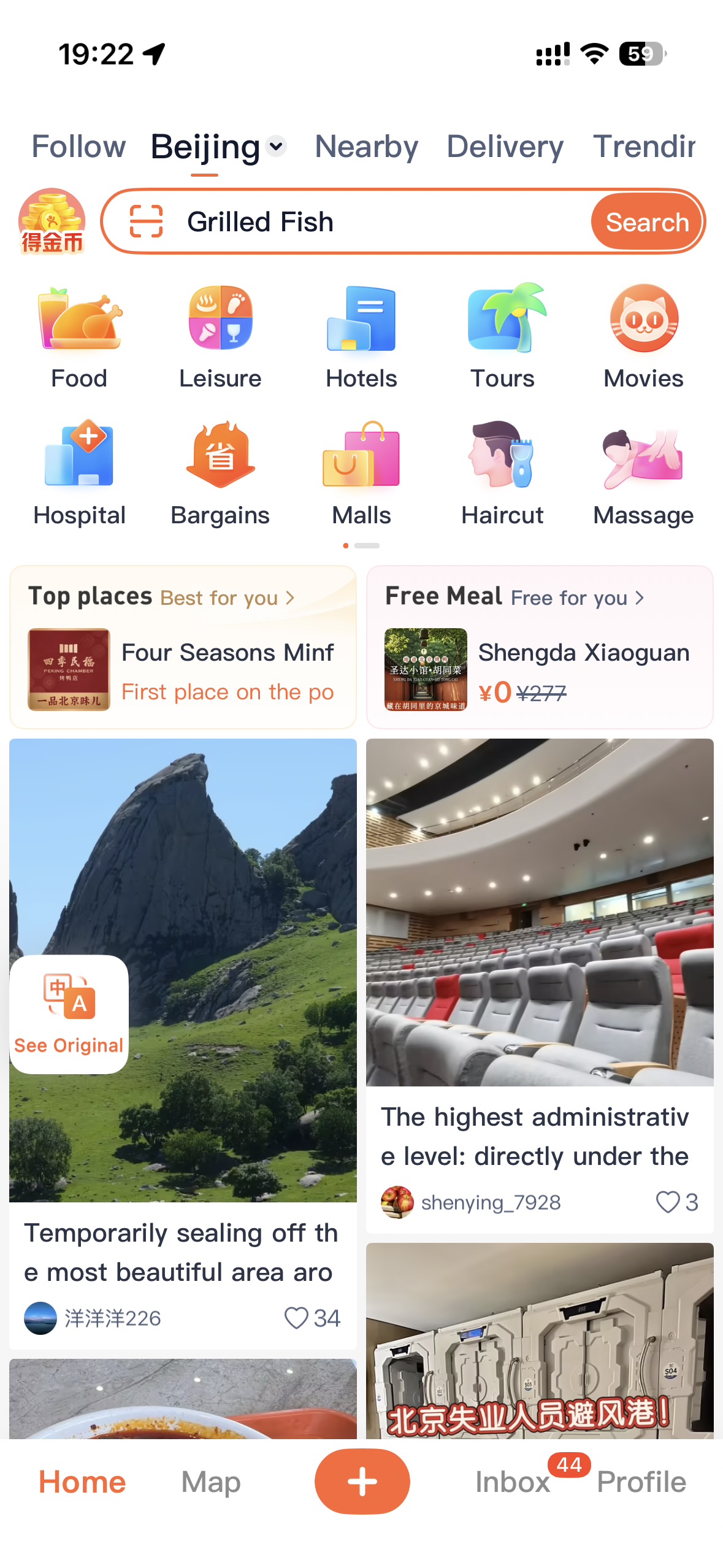
2. Do not trust score alone
A 4.8 score is helpful, but it is not enough by itself. Look at the rating, review count, cuisine type, location, tags, and whether the listing still has recent activity. A restaurant with thousands of reviews and a steady 4.5-4.8 score is often more reliable than a tiny place with a very high score and only a handful of reviews.
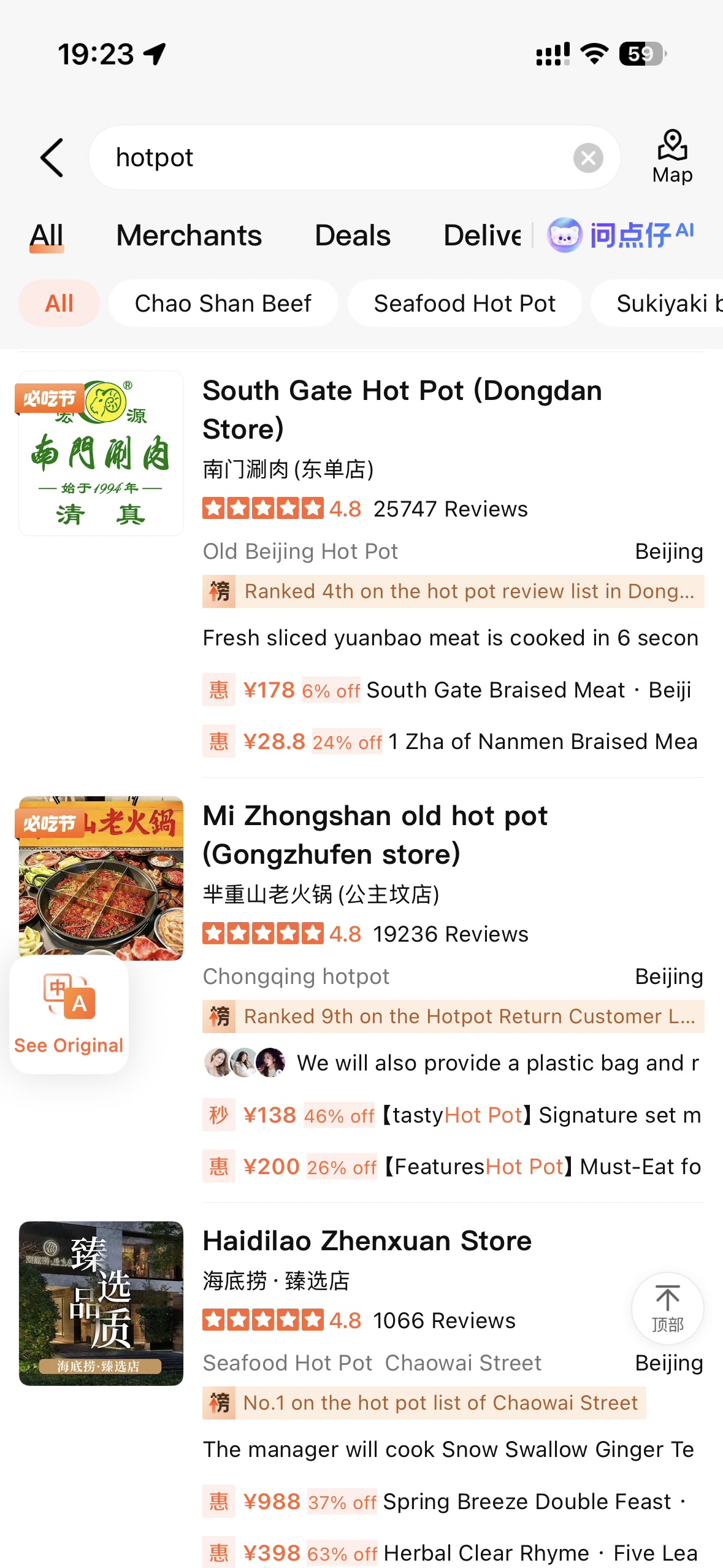
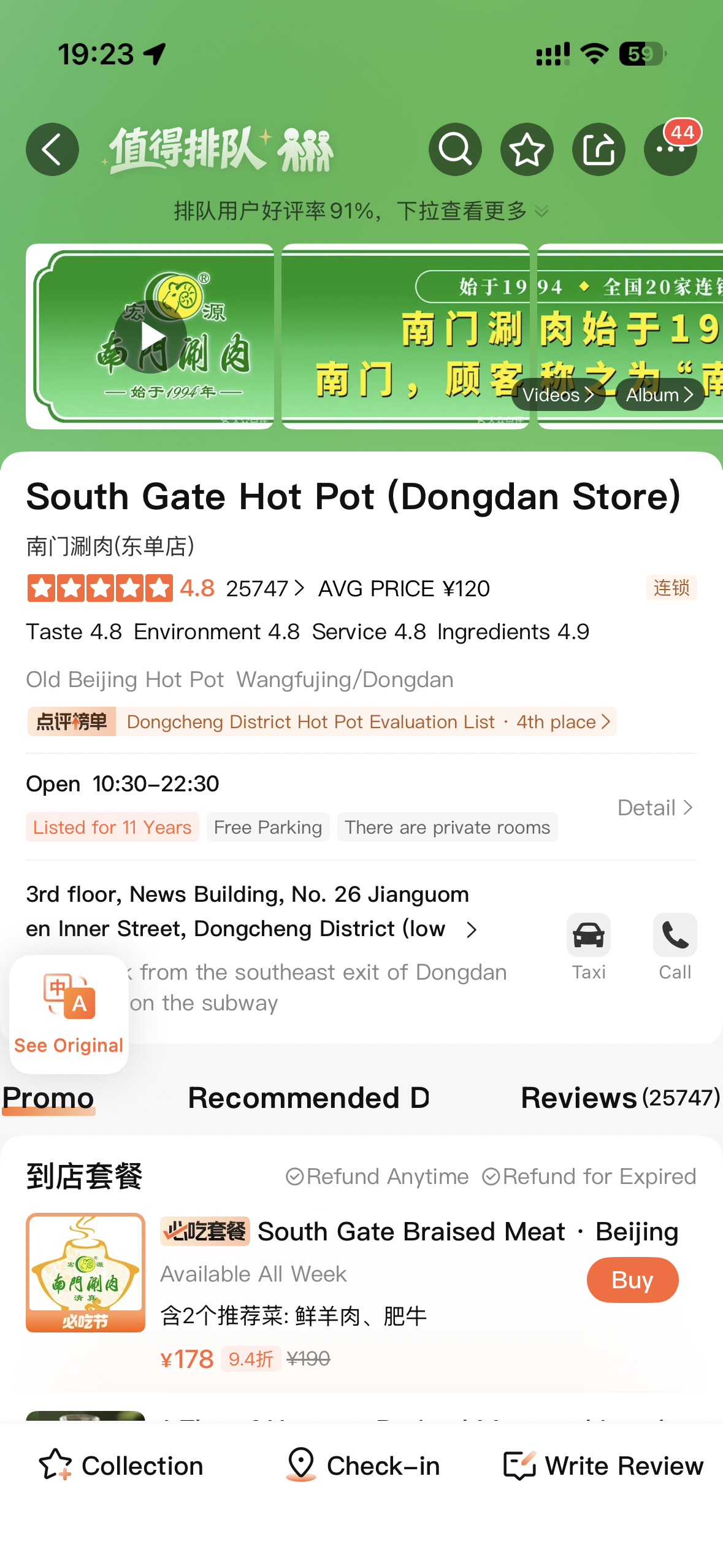
3. Read the restaurant page like a local checklist
On the restaurant detail page, check the average price, opening hours, address, distance from subway or hotel, whether people say it is worth queuing for, and whether the place is a chain. A chain restaurant can be useful for a first China meal because the experience is usually more predictable.
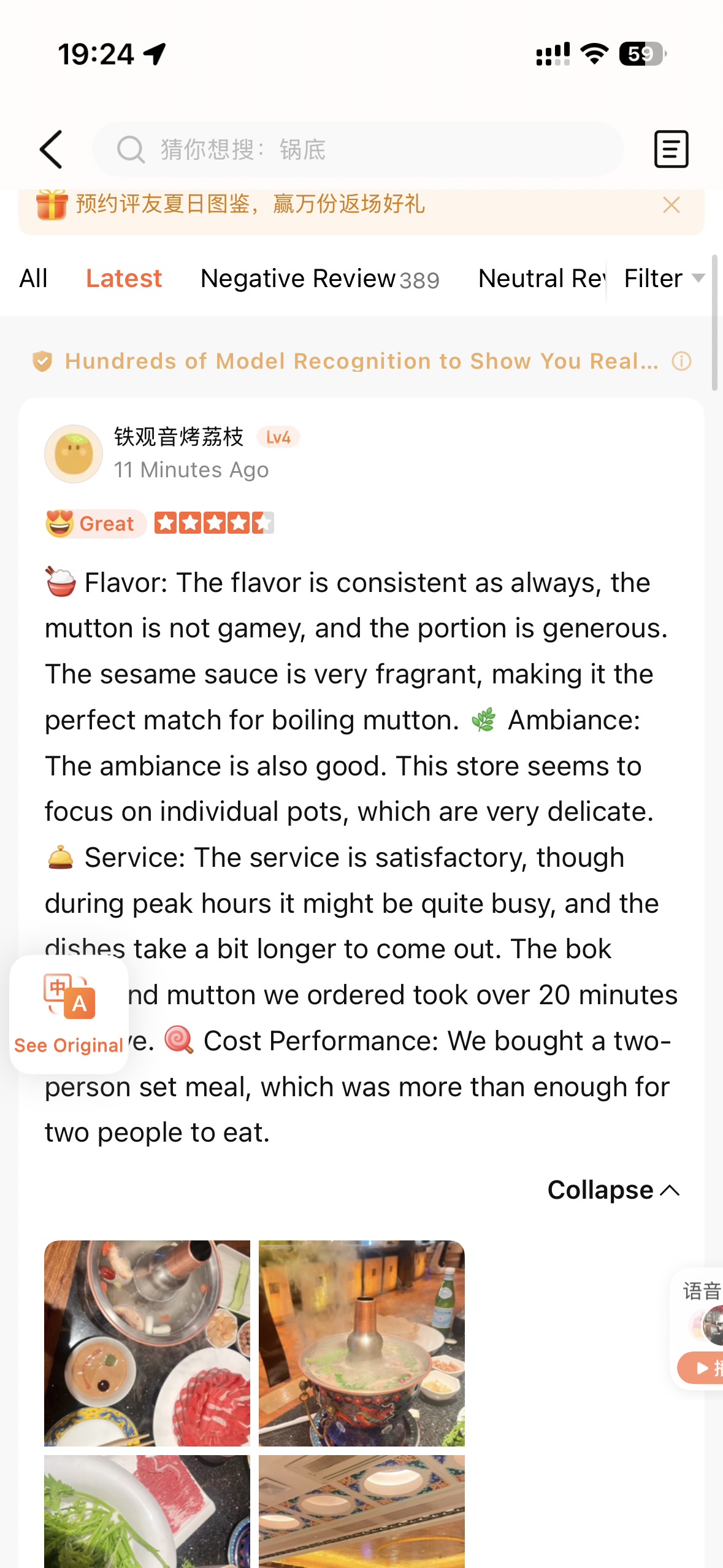
4. Check recent reviews, not only popular reviews
Restaurants change. A place that was excellent last year may now be crowded, overpriced, or less consistent. Open recent reviews and photo reviews. Be careful if recent comments repeatedly mention long queues, worse service, smaller portions, higher prices, or a tourist-trap feeling.
5. Use photos to decide whether the food fits you
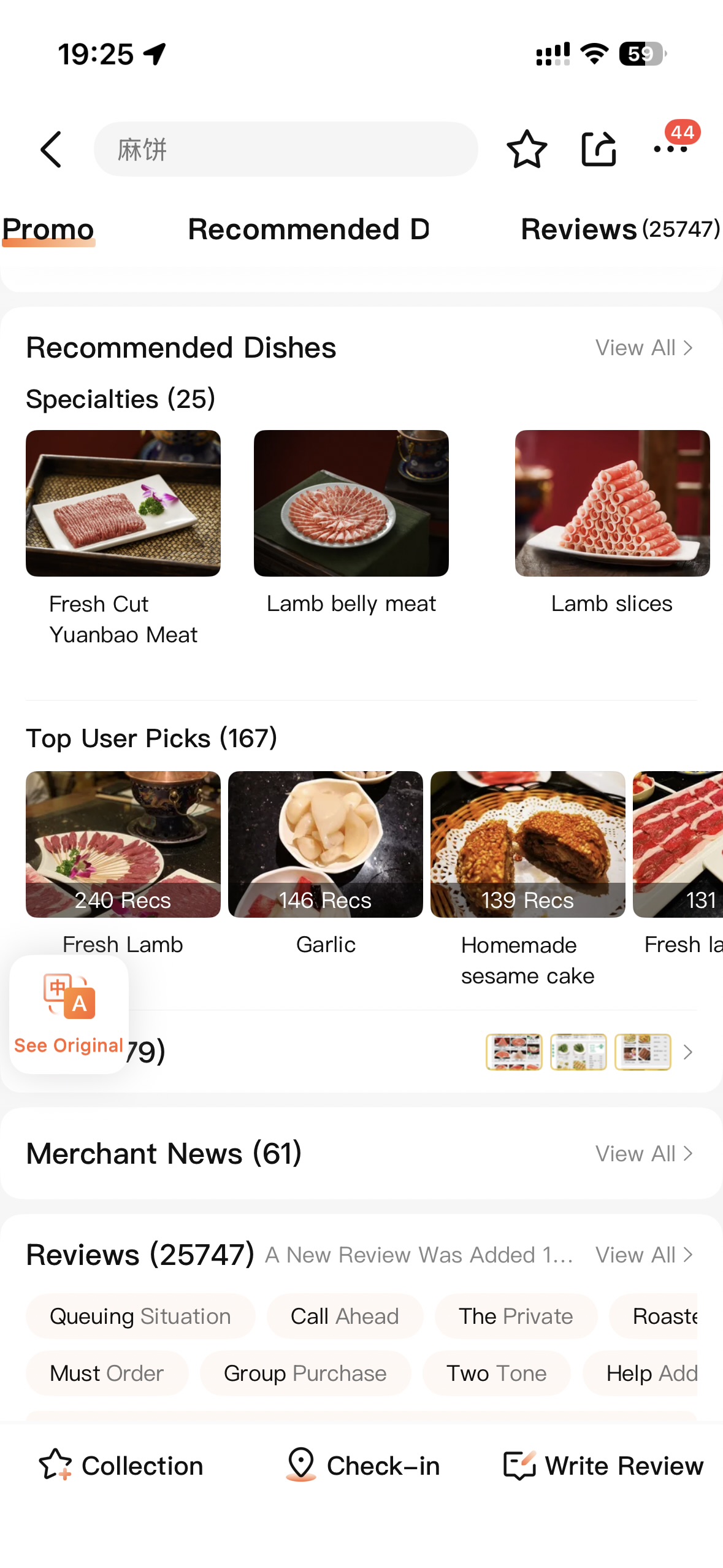
Photos are especially useful when you cannot read every Chinese menu item. Look at recommended dishes, top user picks, portion sizes, ingredients, table setup, and whether the food looks too spicy, oily, unfamiliar, or hard to share. Solo travelers should pay attention to whether one person can order comfortably.
6. Use deals and average price as a rough budget signal
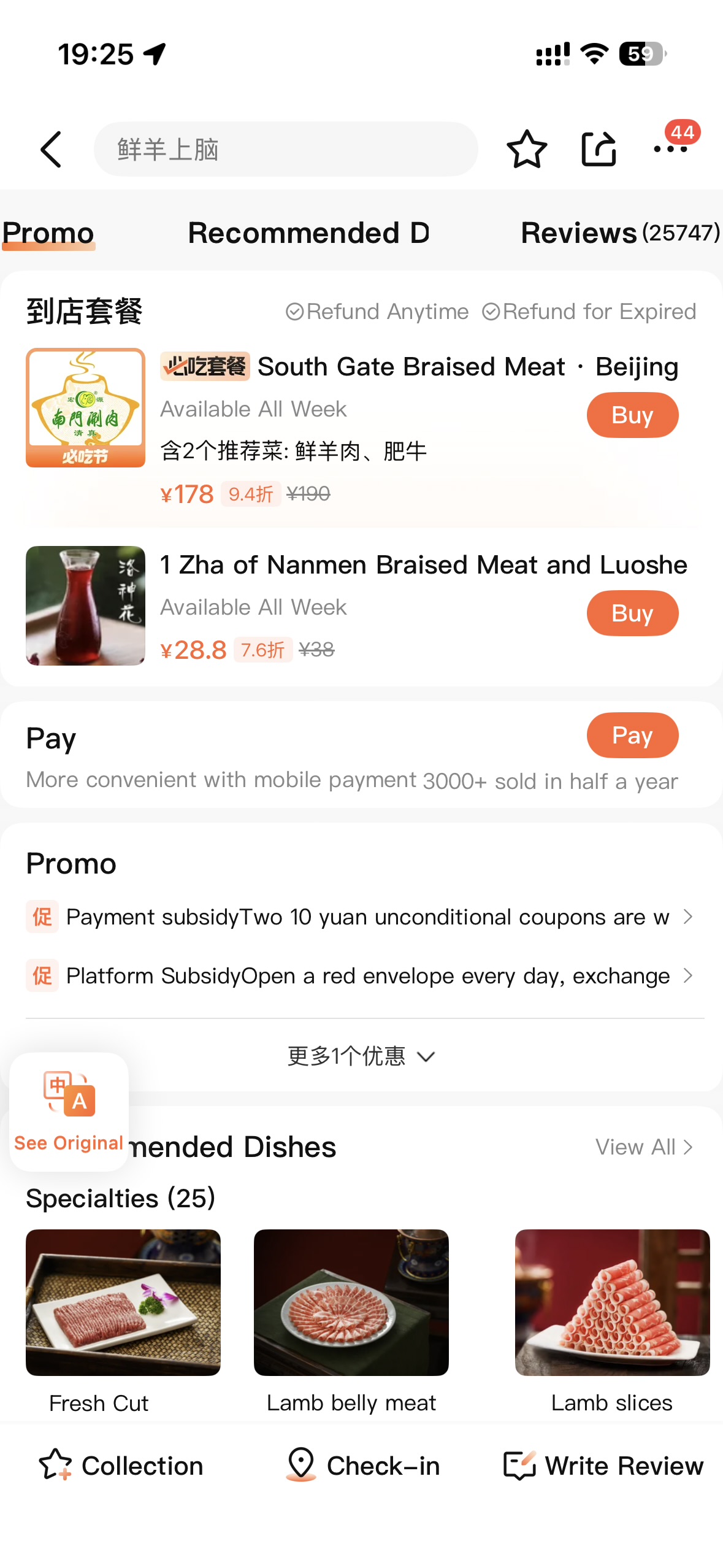
Dianping often shows group-buy deals, set meals, coupons, and average price per person. You do not need to buy every deal, but the page can help you understand whether a restaurant is cheap, normal, or expensive. Remember that deal terms may require Chinese payment flows or app-specific redemption.
7. Be extra careful with food allergies
If you have allergies, do not rely only on spoken English or machine translation at the table. Prepare a clear Chinese and English note before you travel. Keep it on your phone and print a paper copy. Restaurant staff are usually more able to help when the restriction is written clearly in Chinese.
A simple Dianping restaurant filter
- Good rating and enough reviews.
- Recent reviews still look stable.
- Photos match what you actually want to eat.
- Distance and opening hours work for your day.
- Price range is clear.
- Any food allergy or dietary restriction can be explained in Chinese.
When to choose an easier restaurant
On your first day in China, it is okay to choose a mall restaurant, a well-known chain, or a place with many photos and clear reviews. After you are comfortable with Alipay, WeChat Pay, translation, and QR-code ordering, you can slowly try more local restaurants with less English support.
FAQ
Can foreigners use Dianping in China?
Usually, yes for browsing restaurant ratings, photos, addresses, prices, and reviews. Some coupon, payment, ordering, or login features may be harder without Chinese language ability or local app setup, but the restaurant research value is still high.
Is Dianping better than Google Maps for restaurants in China?
For mainland China restaurant discovery, Dianping often has fresher local reviews, photos, menu clues, average prices, and queue signals. Google Maps can still help with orientation, but it is usually not the strongest restaurant database inside mainland China.
How do I search Dianping if I cannot read Chinese?
Translate the dish or cuisine name first, paste the Chinese term into Dianping, then judge results by photos, review volume, recent comments, price, location, and opening hours.